- Rafael Hangula
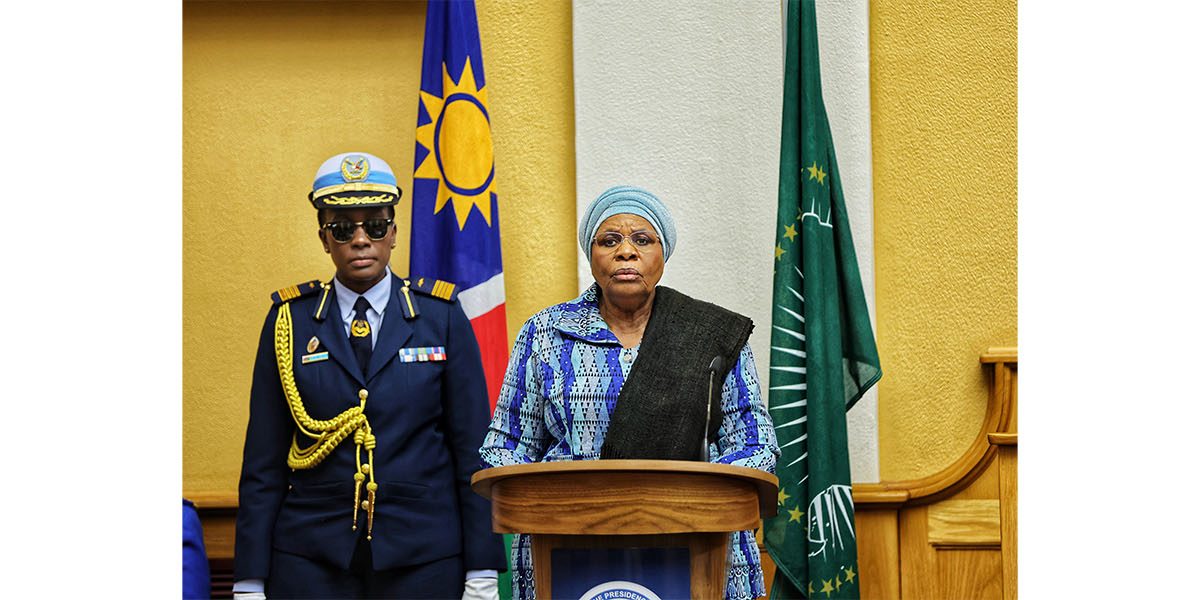
Windhoek-President Netumbo Nandi-Ndaitwah today delivered her second State of the Nation Address (SONA) during a joint sitting of the National Assembly and National Council, highligting the government’s commitment to advancing Namibia’s development agenda under Vision 2030.
This year’s SONA was marked by a somber atmosphere following the passing of Honourable James Uerikua and his son. The President led Parliament in a moment of silence to honour his contribution to the nation and the legislative process.
In her address, President Nandi-Ndaitwah outlined the 8th administration’s continued alignment with the Constitution and the Sixth National Development Plan (NDP6), emphasising coordinated implementation of national priorities through legislation, budget allocations, and institutional reforms.
She highlighted significant progress in the legislative agenda, with multiple bills before Parliament and others cleared for tabling to support economic transformation, governance, and public service delivery.
On the economic front, the President noted improved fiscal stability, including the repayment of the N$14.3 billion Eurobond, growth in foreign reserves, and rising investment activity. Reforms such as faster VAT refunds and financial sector transformation are enhancing the ease of doing business and supporting private sector growth.
The President also pointed to continued infrastructure and development investments under NDP6, backed by a national budget exceeding N$106 billion, with funding directed toward key sectors including agriculture, health, education, energy, and transport.
In agriculture, she said the government aims to achieve food self-sufficiency by reducing reliance on imported food by 80% by 2030, supported by targeted subsidies, production growth, and value chain development.
Progress in social sectors was also highlighted, including the expansion of education infrastructure, the introduction of fully subsidized tertiary education for eligible students, and improvements in healthcare systems through increased staffing, procurement reforms, and upgraded facilities.
The address further outlined advancements in youth empowerment, housing delivery, land reform, and job creation, with over 130,000 new employees registered during the review period.
On governance, the President emphasized Namibia’s strong performance in regional and global indices, including improvements in media freedom and governance rankings, while reaffirming government’s commitment to fighting corruption and strengthening accountability.
The Fifth President of Namibia called for unity and collective effort, stressing that legislative alignment, policy implementation, and stakeholder collaboration remain key to achieving a resilient, inclusive, and prosperous Namibia.