Sakeus Iikela
Every year, the national budget arrives on the table of Parliament carrying billions of dollars in proposed expenditure across ministries, programmes and development priorities.
Members of Parliament, both from the National Assembly and the National Council, debate the allocations before approving how public money will be spent.
But behind the figures lies a more complicated question: does Parliament have enough independent technical capacity to interrogate those numbers in detail?
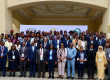
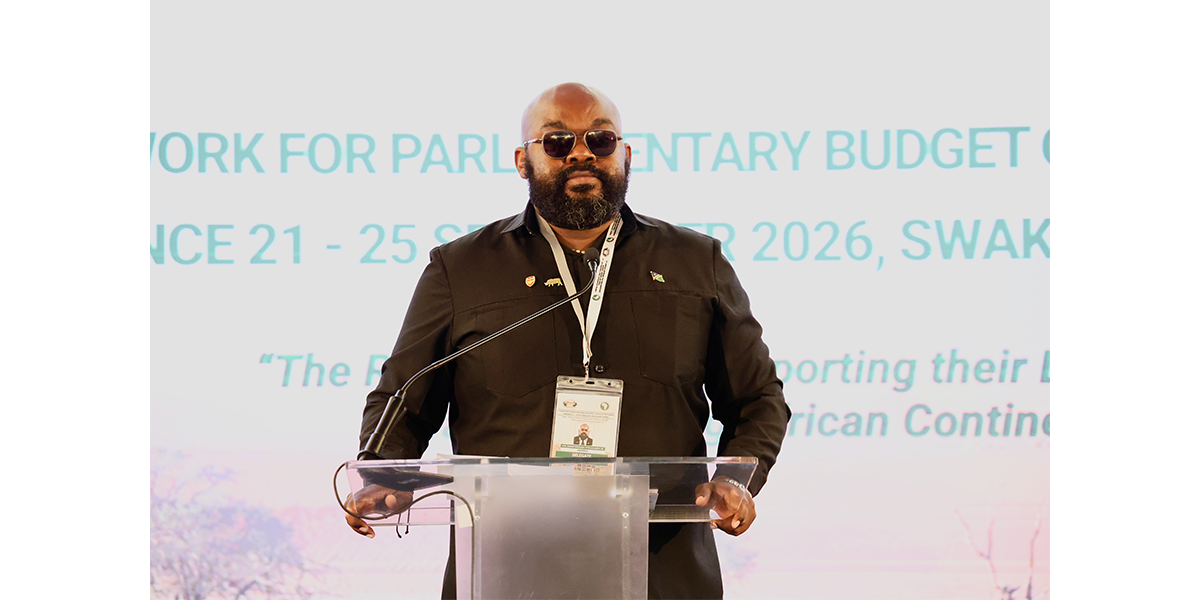
That question was at the centre of discussions at the 9th Annual Conference of the African Network of Parliamentary Budget Offices (AN-PBO) held in Swakopmund, where Namibia’s plans to establish its own Parliamentary Budget Office have received renewed attention.
For a country that does not yet have such an office, the obvious starting point is simple: what exactly is a Parliamentary Budget Office, what would it do, and what difference could it make to Namibia’s budget process?
WHAT IS A PARLIAMENTARY BUDGET OFFICE?
A Parliamentary Budget Office, commonly referred to as a PBO, is essentially a specialised technical unit within Parliament that provides independent analysis of the national budget, public finances and other proposals that may have financial implications for the State.
Rather than replacing the Ministry of Finance or preparing the national budget itself, its role is to strengthen Parliament’s ability to understand and scrutinise the financial information presented by the Executive.
In practical terms, this means Parliament would have economists, accountants, researchers and other specialists available to analyse government spending, revenue projections, proposed legislation and other fiscal matters before MPs make decisions.
National Assembly MP and member of the Budget and Finance Committee, Hon. Marius Sheya says this is one of the main gaps Namibia is seeking to address.
He said establishing a PBO would allow Parliament to recruit people with specialised expertise in areas such as economic analysis, accounting and public finance to support MPs in interpreting and analysing the national budget.
Currently, much of the technical preparation of the budget rests with the Executive, particularly the Ministry of Finance, while Parliament considers the document after it has been tabled.
Sheya said the challenge is that MPs themselves may not always have the specialised expertise required to unpack a highly technical national budget.
“Do we have the expertise, the skills to be able to draft a budget, to be able to understand and interpret the budget?” he asked, arguing that a PBO could address this gap by providing professional advice to Parliament, its committees and the Speaker.
GOING BEYOND THE FIGURES
The work of a PBO would also go beyond telling MPs how much money has been allocated to a ministry.
The office could examine what lies beneath those allocations.
For example, if the Ministry of Agriculture, Water and Land Reform is allocated a budget of N$10 billion for a particular financial year, Parliament could ask whether the programmes receiving that money correspond with national development priorities, whether regions and constituencies are adequately catered for and whether proposed expenditure is likely to achieve its intended purpose.
According to Hon. Sheya, the current process followed during budget debate can sometimes focus heavily on the overall ceilings allocated to ministries without sufficient capacity to interrogate the finer details.
A PBO, he argued, could help Parliament determine whether allocations are responsive to national and regional priorities and provide the technical information needed when MPs consider possible adjustments to a budget.
That could change the character of the budget debate.
Instead of asking only “How much is being spent?”, MPs could increasingly ask: Why is it being spent? Who benefits? Is the allocation sufficient? Is it sustainable? And is it producing results? Is it a responsive budget? But, if we talk about a responsive budget, do we have ample time to analyse the budget and go one by one to ask whether the allocation is speaking to our aspirations,” he stressed.
Hon. Sheya added that the Parliamentary Budget Office would not limit its work to the annual national budget.
Some Bills, motions and government agreements can carry major financial consequences.
Hon. Sheya explained that where an MP introduces a proposal with significant implications for public finances, Parliament could refer it for technical analysis to determine what it would cost, how it would affect the national budget and whether it is affordable and sustainable.
The same technical expertise could assist Parliament in examining agreements entered into by government institutions before lawmakers are required to consider them.
This would give MPs access to their own technical analysis instead of depending mainly on information prepared by the institutions whose proposals they are scrutinising.
WHY DOES INDEPENDENCE MATTER?
At its core, the argument for a Parliamentary Budget Office is also about the balance between the Executive and the Legislature.
Professor Dumisani Jantjies, a leading figure in the African Network of Parliamentary Budget Offices, says legislatures need sufficient capacity to independently interrogate whether government budgets are advancing development priorities.
He said parliaments across the continent have historically had a limited role in budget processes, but growing concerns over unemployment, poverty and other development challenges have increased pressure on legislatures to scrutinise how public resources are being used.
For Jantjies, the objective is not simply to produce another institution that analyses numbers.
It is to enable Parliament to examine the impact of those numbers.
“Has spending reduced unemployment? Has it addressed poverty? Have programmes achieved the outcomes for which Parliament approved funding?” he stressed.
That, he said, is part of shifting parliamentary budget oversight away from “number crunching” towards assessing whether expenditure is actually changing people’s lives.