Sakeus Iikela
Speaker of the National Assembly Saara Kuugongelwa-Amadhila has reaffirmed Namibia’s commitment to establishing a Parliamentary Budget Office (PBO) to strengthen legislative oversight among other things.
The PBO, she said, will also promote fiscal accountability and ensure that public resources are utilised effectively.
A Parliamentary Budget Office provides lawmakers with independent and non-partisan analysis of government budgets, revenue projections and expenditure plans.
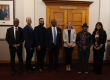
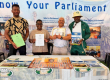
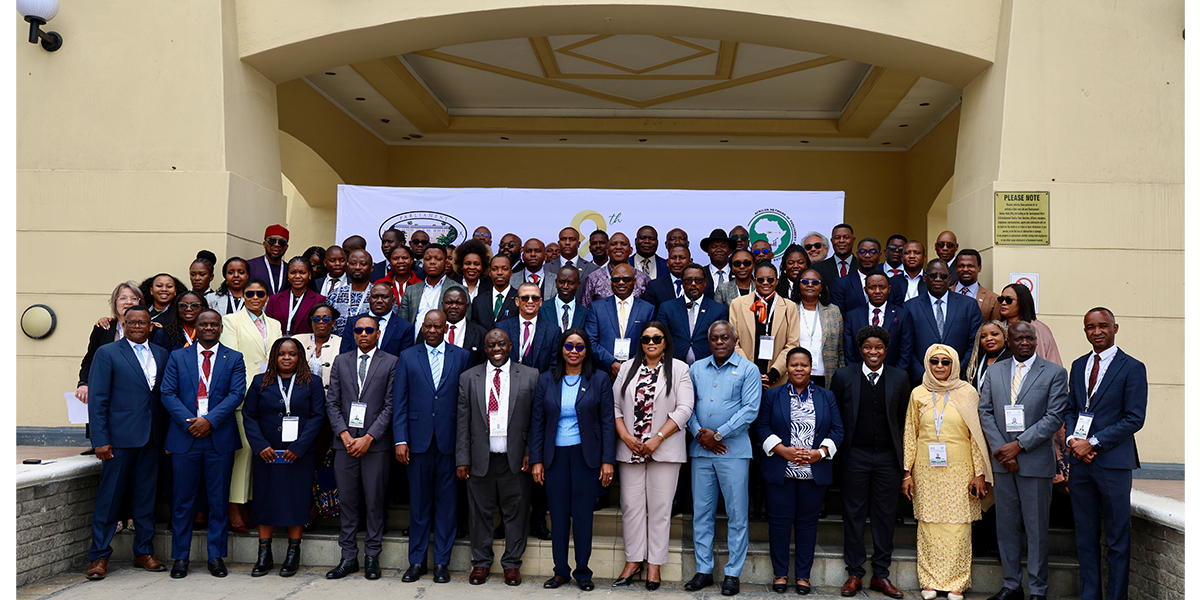
The Speaker made these remarks during the 9th Annual Conference of the African Network of Parliamentary Budget Offices (AN-PBO) held in Swakopmund last week.
The conference was hosted under the theme: “The Role of PBOs in Supporting their Legislatures’ Oversight Towards Realizing Africa’s Agenda 2063”.
At the opening, Hon. Kuugongelwa-Amadhila said the establishment of a dedicated PBO would enhance Parliament’s capacity to scrutinise government expenditure and ensure that national budget allocations respond to citizens’ developmental needs.
She noted that although Namibia is still in the initial stages of establishing its PBO, the country remains committed to building an effective institution with support from sister parliaments and the African Network.
The Speaker expressed appreciation to the network’s Governing Council for awarding Namibia the hosting rights, describing the decision as an important demonstration of institutional trust and Pan-African solidarity.
“This decision will undoubtedly accelerate our domestic efforts to establish an effective, fully functional PBO that will robustly support the Parliament of Namibia and, by extension, the people of Namibia,” she said.
The Speaker highlighted the growing fiscal challenges facing African economies, including rising debt vulnerabilities, illicit financial flows, procurement inefficiencies and increasing demands for public services.
She emphasised that while public borrowing can support economic growth and development, inadequate oversight could undermine economic stability and place additional burdens on future generations.
The Speaker stressed that parliaments have a constitutional responsibility to ensure that borrowing decisions, economic policies and budget allocations are guided by transparency, prudence and the interests of citizens.
She further underscored the importance of independent technical expertise in strengthening parliamentary oversight, noting that political will alone is insufficient to ensure effective scrutiny of public finances.
According to her, Parliamentary Budget Offices and Independent Fiscal Institutions provide legislators with independent analysis, fiscal forecasting and objective technical advice necessary to scrutinise Executive spending and demand tangible development outcomes.
The Speaker also called for greater citizen participation in national budget processes to ensure that legislative decisions contribute meaningfully to improving livelihoods.
At the same event, the Chairperson of the National Assembly’s Standing Committee on Budget and Finance, Hon. Helaria Mukapuli, emhpasised that the establishment of a Parliamentary Budget Office in Namibia is long overdue.
“The establishment of independent, fully functional Parliamentary Budget Offices is no longer a luxury — it is a necessity for effective legislative oversight,” she said.
She said her Committee carries a broad mandate that includes examining estimates of State revenue and expenditure, supplementary estimates and excess expenditure.
The committee also assists the Speaker during consultations with the Minister of Finance and the Director-General of the National Planning Commission as part of the official budget process.
She said these responsibilities require specialised technical capacity in finance, economics and budgeting, making the establishment of a Parliamentary Budget Office important to supporting the work of the committee.
“I think we can all agree this is a massive responsibility requiring real technical capacity and expertise, specifically a Parliamentary Budget Office. Namibia is on that journey, and we are committed to walking it with determination and purpose,” Hon. Mukapuli said.
According to her, Namibia is already following a phased approach towards operationalising such an office, with support from UNICEF.
UNICEF has funded a consultant to provide technical support to the Budget and Finance Committee and has also supported efforts aimed at developing the foundations for a fully independent Parliamentary Budget Office.
On his part, AN-PBO Governing Council Chairperson Sulaiman Kiggundu said experience from other African legislatures shows that Parliamentary Budget Offices can strengthen fiscal analysis, revenue forecasting, debt management and parliamentary oversight.
Kiggundu said the Network stands ready to provide Namibia with technical support, peer exchange and institutional assistance as Parliament works through the legal, institutional and administrative processes required to establish the office.
According to Kiggundu, such offices strengthen Parliament’s ability to interrogate macroeconomic assumptions, revenue forecasts and expenditure projections, while allowing legislators to track public resources from budget allocations through to service delivery.
He said effective budget oversight should go beyond approving expenditure and examine what is being funded, how much it costs and who ultimately benefits from public spending.
Kiggundu also stressed that expenditure alone should not be regarded as evidence of development, arguing that legislatures should assess whether budget commitments are translated into actual implementation and measurable outcomes.
“A commitment is not an allocation; an allocation is not implementation; and expenditure, in itself, is not evidence of progress,” he said.
He said the role of PBOs is therefore to help legislatures scrutinise every stage of the budget process and ensure that continental development ambitions are reflected in improvements in areas such as education, health, infrastructure, agriculture and enterprise development.
The Network, established in Cape Town in 2016 with four member countries, has since expanded to 16 sovereign members and plans to broaden its presence across Francophone, Portuguese-speaking and Maghreb Africa.
Kiggundu said AN-PBO also intends to open its membership and cooperation more widely to provincial and sub-national legislatures whose budget oversight responsibilities are becoming increasingly important in decentralised systems of government.