 Andreas Sheya
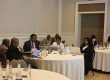
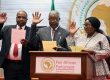
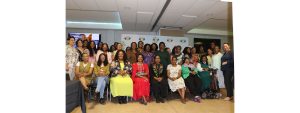
Namibia’s female parliamentarians, from both the National Assembly and National Council convened in Swakopmund from 14 to 15 March 2026 for the Parliamentary Women Caucus, reaffirming their commitment to advancing gender equality and strengthening women’s participation in governance. The gathering was officially opened by Speaker of the National Assembly, Saara Kuugongelwa-Amadhila, and attended by Honourable Leah Sankaire, Chairperson of the Kenya Women Parliamentary Caucus, as the guest of honour.
The Vice-Chairperson of the National Council, Honourable Emma Muteka in her welcoming remarks views the women caucus as a key platform for inclusive leadership, emphasizing on the importance of strengthening women’s representation and collaboration in legislative spaces. She underscored the significant influence women leaders hold in shaping policies and improving the lives of citizens.
In her remarks, she described Women Caucus as a vital platform that goes beyond a formal structure, serving instead as a mechanism for solidarity, shared leadership, and collective action among women parliamentarians. She equally noted that such collaboration is essential to ensuring that national development reflects the lived realities of women, families, and communities. Signifying that “When women leaders support one another, share experiences, and collaborate on solutions, they strengthen not only themselves but also the institutions they serve,” .
In her opening address, Honourable Kuugongelwa-Amadhila stressed that women’s parliamentary caucuses exist to serve a purpose beyond routine political engagement. “They are, at their core, a reaffirmation of our collective commitment as women entrusted with public office to serve those whose voices are not always heard in the halls of power,” she said. And called on members to rise above party lines and work collectively to promote gender equality and ensure that state institutions reflect the needs of all citizens. She emphasized that while the responsibility for social transformation should not rest on women alone, and highlighted the urgent need to reform systems that continue to disadvantage women, particularly survivors of gender-based violence, pointing to the central role of courts, law enforcement and social services. She also warned against the growing misuse of digital platforms to intimidate women in leadership. “The weaponization of social platforms to discredit and discourage women is a growing phenomenon. It cannot be left to individuals to manage alone,” she noted.
The Speaker implored fellow women lawmakers to pay attention to structural barriers limiting women’s economic participation. Kuugongelwa-Amadhila called for state budgets and financial systems to better support women-led enterprises. “We must evaluate whether our financial architecture is designed to reach women and provide them with the support, market access and financing they need to grow,” she said, while lauding the efforts of initiatives by the Shack Dwellers Federation of Namibia. Reaffirming Namibia’s commitments under international and regional frameworks, including the Convention on the Elimination of All Forms of Discrimination Against Women and the Southern African Development Community Protocol on Gender and Development, she stressed that these are binding obligations. “These instruments are not just aspirational documents; they are commitments that bind us, and it falls on us to hold our institutions accountable,” she said.
In her remarks, Hon. Sankaire underscored the importance of women’s caucuses in strengthening democratic governance, underscoring that “the pursuit of gender equality is not a discretion, but an obligation,” she said, adding that inclusive governance strengthens democracy and supports sustainable development, echoing sentiments expressed by former New Zealand Prime Minister Helen Clark.
Drawing on Kenya’s experience, she highlighted how constitutional reforms adopted in 2010 have improved women’s political participation through affirmative action. “Today I sit in Parliament courtesy of an affirmative action provision in our Constitution, deliberately created to ensure women’s representation,” she said. Global data from the Inter-Parliamentary Union indicates that women remain underrepresented in political leadership, holding 27.5 percent of parliamentary seats and 22.4 percent of cabinet positions worldwide. Participants noted that women’s caucuses play a critical role in fostering cooperation across political divides and amplifying women’s voices.
A key outcome of the meeting was the election of the caucus leadership. Hon. Sharonice Busch was elected Chairperson, deputized by Hon. Suzan Ndjaleka, with Hon. Brenda Rooi as Secretary and Hon. Nono Katjingisiua as Treasurer. Additional members include Hon. Lilian Lutuhezi, Hon. Rosa Mbinge, Hon. Aina Kodi, Hon. Alexia Manombe-Ncube and Hon. Christine Haindaka.
In her acceptance remarks, Sharonice Busch committed the caucus to advancing gender-responsive law-making and strengthening women’s representation. “We must not only break the glass ceiling, but build a pipeline, it is our responsibility to ensure that the leadership and capacity of women, both within Parliament and those coming after us, is developed.” She further emphasized the importance of unity and accountability. “We will work with a sense of purpose and build cohesion among us to ensure that at the end of our tenure, we can be proud of the work we have done,” she said.
The establishment and strengthening of the Parliamentary Women’s Caucus is a critical step toward building a more inclusive and responsive parliament, capable of addressing the diverse needs of society. The caucus concluded its session by outlining priority areas for advocacy, including addressing gender-responsive budgeting, enhancing economic empowerment for women and strengthening institutional accountability. The female legislators underscored the need to move beyond dialogue to measurable outcomes, with a renewed focus on effective oversight and implementation of policies aimed at improving the lives of women and girls in Namibia.